

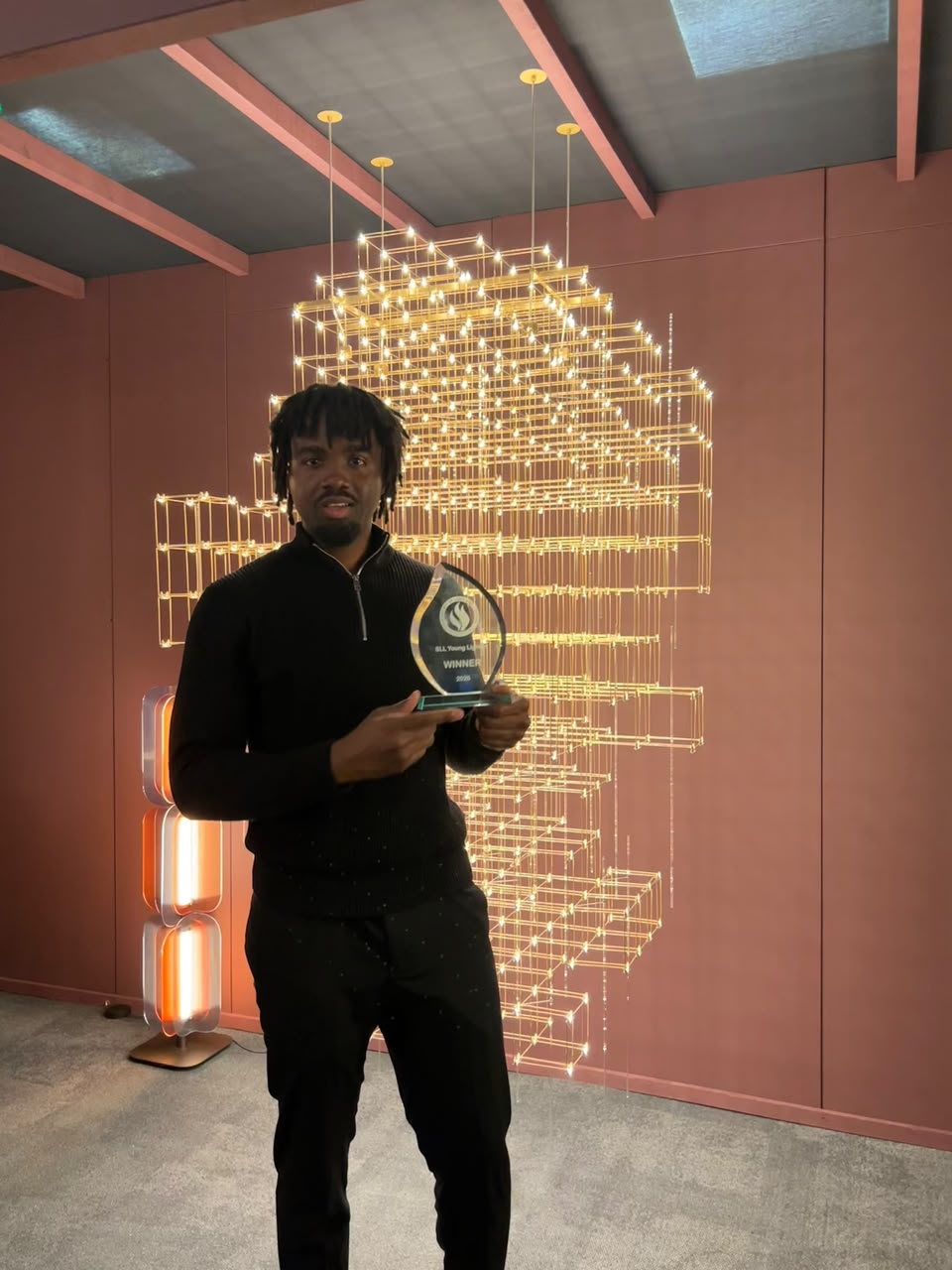
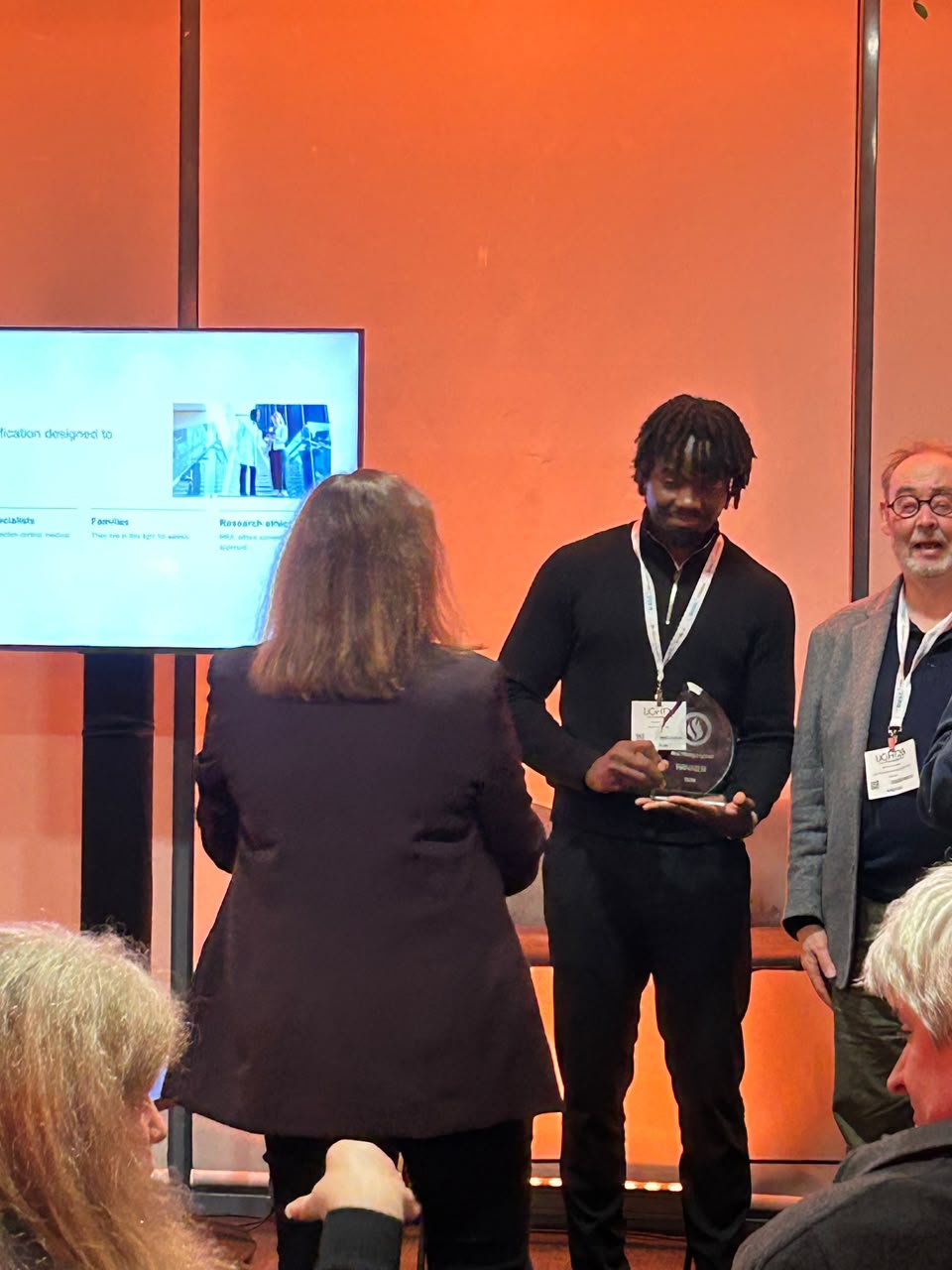
Nigerian engineer Hakeem Musa has won the CIBSE SLL Young Lighter of the Year 2026, an award that turns lighting design toward one of the most sensitive rooms in any building: the neonatal unit.
Musa, who hails from Edo State, took the prize for his paper, “Born into Light”. Entries came from around the world, and he presented the winning work at LiGHT Expo, the UK’s leading lighting exhibition. The Society of Light and Lighting (SLL) runs the contest, and it sits alongside CIBSE, the Chartered Institution of Building Services Engineers.
“I’m grateful to the judges for recognising my approach to lighting design, and to my team for backing me throughout the process. I’m also honoured to have stood alongside brilliant finalists with experience and exposure I’m still working towards.”
What the SLL Young Lighter award is
The SLL is the lighting body within CIBSE. And because both CIBSE and the IET sit under the UK’s Engineering Council — the body that grants chartered-engineer status — the title carries real weight. It goes to designers early in their careers, on the strength of a written paper and a live presentation. So the win places Musa among the names to watch in lighting design.
The idea: lighting built for a baby’s first hours
“Born into Light” starts from a simple, difficult question. What should the light be like in the room where a baby begins life?
Musa’s answer is a 24-hour spectral profile. In other words, the light follows the sky’s own rhythm rather than sitting at one fixed setting. The curve he presented traces a full day of natural light:
- Sunset — 2,700 K, falling in 20 minutes or less
- Dawn — a gentle 60-minute rise
- Midday — 4,500–6,500 K, at around 150 lux
- Night — a 50-minute dim and warm-down
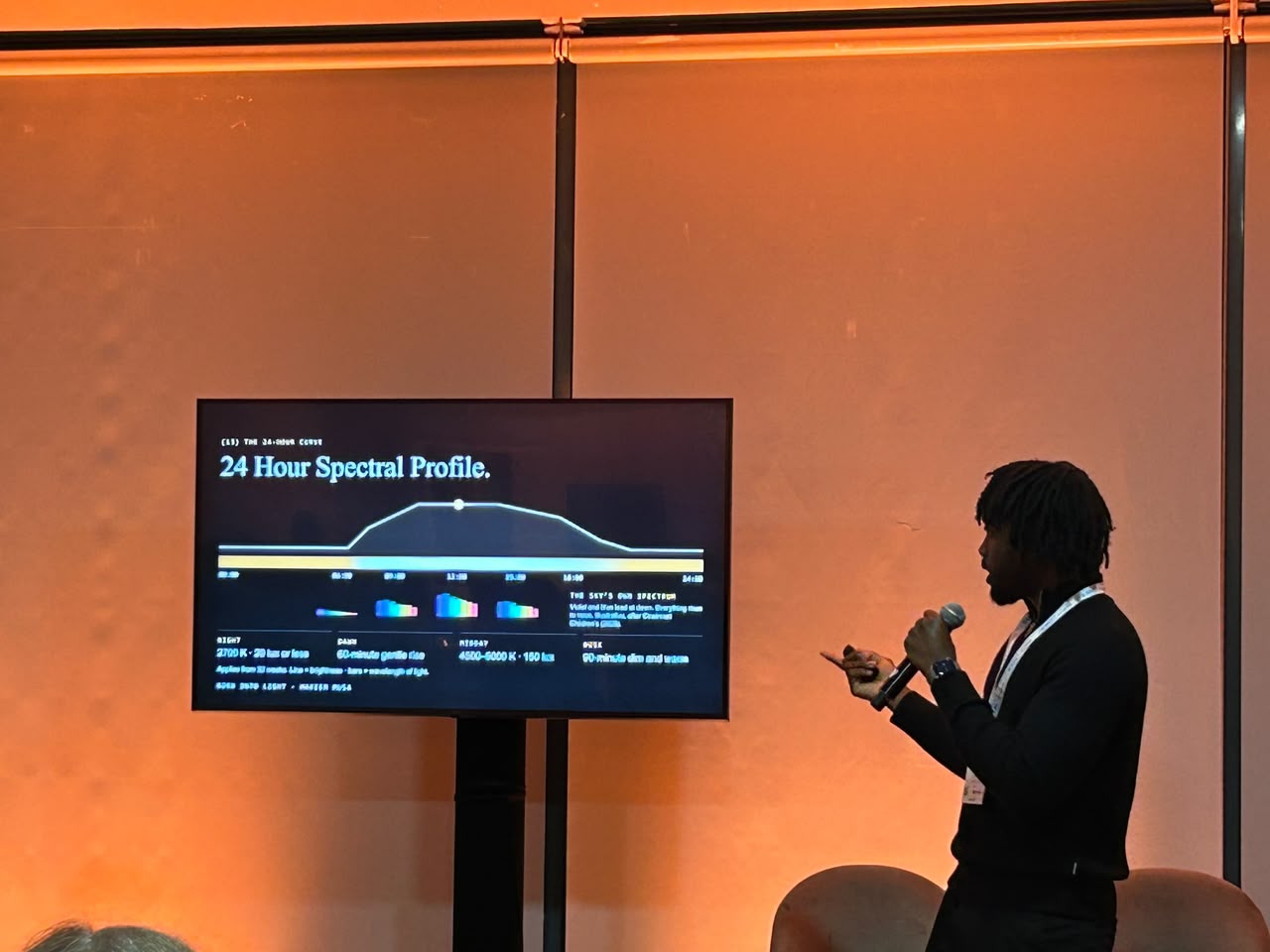
The framework rests on three levers: brightness, CCT (correlated colour temperature) tuning, and spectral tuning. Together, they let a clinical space mirror what natural light does across a day. As his slide puts it: “The sky’s own spectrum — what natural light does. Everything else is man-made.”
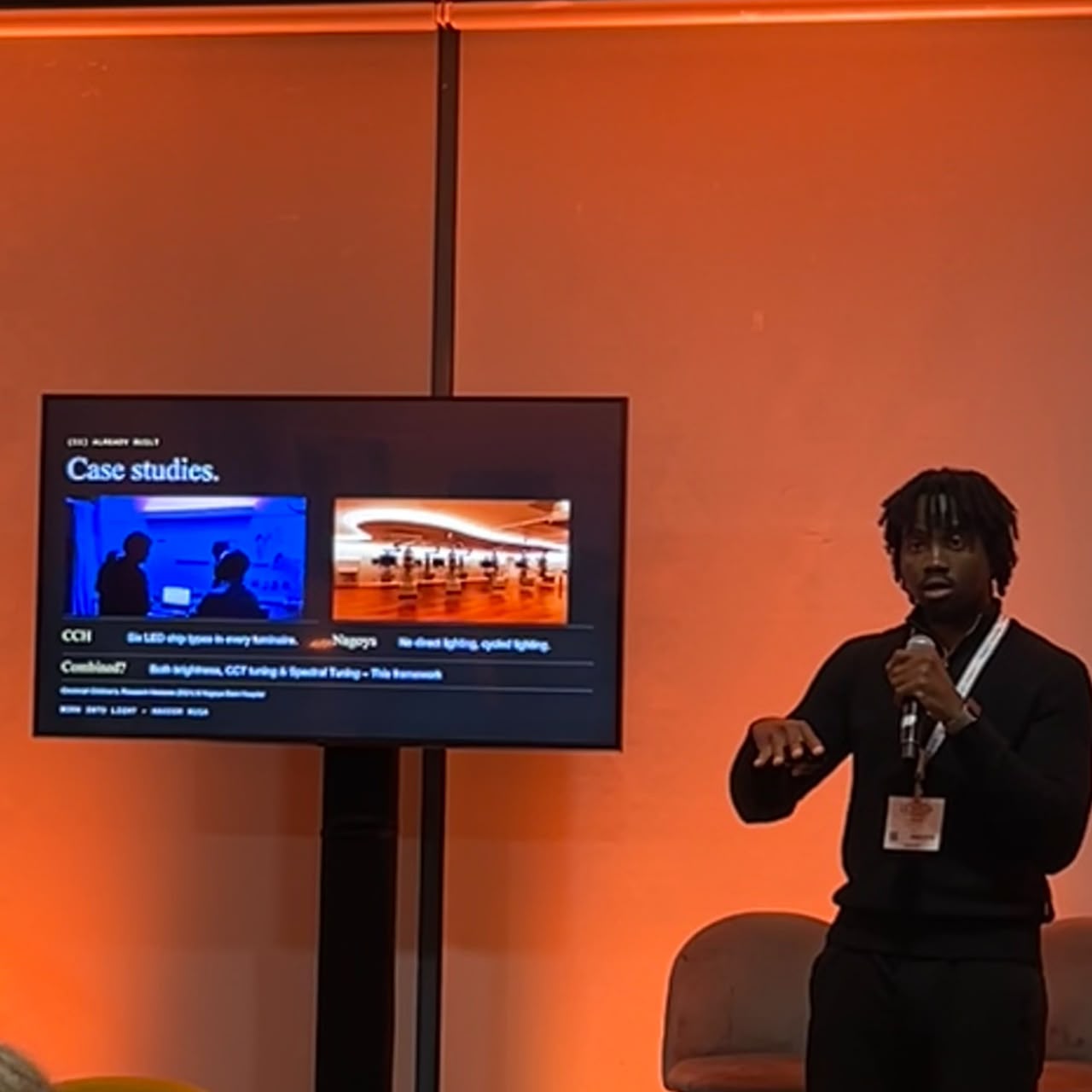
From theory to case studies
Musa grounds the idea in two real projects. At CCI, tunable LED strips run through every luminaire. At Nigerys, meanwhile, dimmed and cycled lighting shapes the space. Different installations, but the same principle: lighting tuned to the moment, not frozen in one colour.
The scale of the problem: 1 in 7
So why neonatal care? Musa sets out the stakes in a single number. Around 1 in 7 babies born in the UK are cared for in a neonatal unit, and that is more than 40,000 a year (source: Bliss). For those infants, the lighting is not a backdrop. It is part of the conditions of care.
Why it matters
Good lighting is invisible when it’s done well. You notice it only when it’s wrong. And in a neonatal unit, “wrong” can mean harsh, unvarying light at the very moment a baby’s body is still learning the difference between day and night. So Musa’s framework treats light as a clinical material: measurable, tunable, and designed around the people it falls on.
At a glance
- Award: CIBSE SLL Young Lighter of the Year 2026
- Winner: Hakeem Musa, electrical engineer from Edo State, Nigeria
- Paper: “Born into Light”
- Field: Lighting design for neonatal and healthcare spaces
- Presented at: LiGHT Expo
- Award body: Society of Light and Lighting (SLL), part of CIBSE
What comes next
Winning the SLL Young Lighter title is a platform as much as a prize. Musa’s focus — tunable, health-aware lighting in the spaces that need it most — sits in one of the fastest-moving areas of lighting design. That matters, because healthcare is moving toward environments that support recovery and development, rather than simply hitting a brightness target.
For a young engineer, it’s a striking choice of subject. Not a landmark façade or a flagship store, but a room full of the smallest patients in the building.
Above all, it’s a reminder that Nigerian engineering talent is competing — and winning — on the global stage. One of the UK lighting industry’s signature early-career honours has gone to a designer from Edo State. That says as much about the depth of the country’s bench as it does about the winner himself.